Mike Tyson to punch up “Law & Order: SVU” with guest appearance


LOS ANGELES (TheWrap.com) – Mike Tyson is stepping into the ring with “Law & Order: SVU.”


The former boxing champ will guest-star on the NBC procedural drama next month, a spokeswoman for the network told TheWrap on Friday.


Tyson will play Reggie Rhodes, a murderer on death row who was victimized by a difficult childhood.


The episode is currently scheduled to air on February 13, just in time for Valentine’s Day.


Tyson has acted before, though he’s primarily played himself, perhaps most notably in “The Hangover” series of movies. (He’s also played onetime presidential candidate Herman Cain in a pair of short films.)


The role likely won’t be particularly challenging for Tyson, as he’s also spent time behind bars before, serving three years in prison for rape.


TV News Headlines – Yahoo! News


Title Post: Mike Tyson to punch up “Law & Order: SVU” with guest appearance
Url Post: http://www.news.fluser.com/mike-tyson-to-punch-up-law-order-svu-with-guest-appearance/
Link To Post : Mike Tyson to punch up “Law & Order: SVU” with guest appearance
Rating:
100%

based on 99998 ratings.
5 user reviews.
Author: Fluser SeoLink
Thanks for visiting the blog, If any criticism and suggestions please leave a comment


Read More..

‘Bodega Clinicas’ Draw Interest of Health Officials


HUNTINGTON PARK, Calif. — The “bodega clinicas” that line the bustling commercial streets of immigrant neighborhoods around Los Angeles are wedged between money order kiosks and pawnshops. These storefront offices, staffed with Spanish-speaking medical providers, treat ailments for cash: a doctor’s visit is $20 to $40; a cardiology exam is $120; and at one bustling clinic, a colonoscopy is advertised on an erasable board for $700.


County health officials describe the clinics as a parallel health care system, serving a vast number of uninsured Latino residents. Yet they say they have little understanding of who owns and operates them, how they are regulated and what quality of medical care they provide. Few of these low-rent corner clinics accept private insurance or participate in Medicaid managed care plans.


“Someone has to figure out if there’s a basic level of competence,” said Dr. Patrick Dowling, the chairman of the family medicine department at the David Geffen School of Medicine at the University of California, Los Angeles.


Not that researchers have not tried. Dr. Dowling, for one, has canvassed the clinics for years to document physician shortages as part of his research for the state. What he and others found was that the owners were reluctant to answer questions. Indeed, multiple attempts in recent weeks to interview owners and employees at a half-dozen of the clinics in Southern California proved fruitless.


What is certain, however, is that despite their name, many of these clinics are actually private doctor’s offices, not licensed clinics, which are required to report regularly to federal and state oversight bodies.


It is a distinction that deeply concerns Kimberly Wyard, the chief executive of the Northeast Valley Health Corporation, a nonprofit group that runs 13 accredited health clinics for low-income Southern Californians. “They are off the radar screen,” said Ms. Wyard of the bodega clinicas, “and it’s unclear what they’re doing.”


But with deadlines set by the federal Affordable Care Act quickly approaching, health officials in Los Angeles are vexed over whether to embrace the clinics and bring them — selectively and gingerly — into the network of tightly regulated public and nonprofit health centers that are driven more by mission than by profit to serve the uninsured.


Health officials see in the clinics an opportunity to fill persistent and profound gaps in the county’s strained safety net, including a chronic shortage of primary care physicians. By January 2014, up to two million uninsured Angelenos will need to enroll in Medicaid or buy insurance and find primary care.


And the clinics, public health officials point out, are already well established in the county’s poorest neighborhoods, where they are meeting the needs of Spanish-speaking residents. The clinics also could continue to serve a market that the Affordable Care Act does not touch: illegal immigrants who are prohibited from getting health insurance under the law.


Dr. Mark Ghaly, the deputy director of community health for the Los Angeles County Department of Health Services, said bodega clinicas — a term he seems to have coined — that agree to some scrutiny could be a good way of addressing the physician shortage in those neighborhoods.


“Where are we going to find those providers?” he said. “One logical place to consider looking is these clinics.”


Los Angeles is not the only city with a sizable Latino population where the clinics have become a part of the streetscape. Health care providers in Phoenix and Miami say there are clinics in many Latino neighborhoods.


But their presence in parts of the Los Angeles area can be striking, with dozens in certain areas. Visits to more than two dozen clinics in South Los Angeles and the San Fernando Valley found Latino women in brightly colored scrubs handing out cards and coupons that promised a range of services like pregnancy tests and endoscopies. Others advertised evening and weekend hours, and some were open around the clock.


Such all-hours access and upfront pricing are critical, Latino health experts say, to a population that often works around the clock for low wages.


Also important, officials say, is that new immigrants from Mexico and Central America are more accustomed to corner clinics, which are common in their home countries, than to the sprawling medical complexes or large community health centers found in the United States. And they can get the kind of medical treatments — including injections of hypertension drugs, intravenous vitamins and liberally dispensed antibiotics — that are frowned upon in traditional American medicine.


The waiting rooms at the clinics reflected the everyday maladies of peoples’ lives: a glassy-eyed child resting listlessly on his mother’s lap, a fit-looking young woman waiting with a bag of ice on her wrist, a pensive middle-aged man in work boots staring straight ahead.


For many ordinary complaints, the medical care at these clinics may be suitable, county health officials and medical experts say. But they say problems arise when an illness exceeds the boundaries of a physician’s skills or the patient’s ability to pay cash.


Dr. Raul Joaquin Bendana, who has been practicing general medicine in South Los Angeles for more than 20 years, said the clinics would refer patients to him when, for example, they had uncontrolled diabetes. “They refer to me because they don’t know how to handle the situation,” he said.


The clinic physicians by and large appear to have current medical licenses, a sample showed, but experts say they are unlikely to be board certified or have admitting privileges at area hospitals. That can mean that some clinics try to treat patients who face serious illness.


Olivia Cardenas, 40, a restaurant worker who lives in Woodland Hills, Calif., got a free Pap smear at a clinic that advertises “especialistas,” including in gynecology. The test came back abnormal, and the doctor told Ms. Cardenas that she had cervical cancer. “Come back in a week with $5,000 in cash, and I’ll operate on you,” Ms. Cardenas said the doctor told her. “Otherwise you could die.”


She declined to pay the $5,000. Instead, a family friend helped her apply for Medicaid, and she went to a hospital. The diagnosis, it turned out, was correct.


Health care experts say the clinics’ medical practices would come under greater scrutiny if they were brought closer into the fold.


But being connected would mean the clinics’ cash-only business model would need to change. Dr. Dowling said the lure of newly insured patients in 2014 might draw them in. “To the extent there are payments available,” he said, “the legitimate ones might step up to the plate.”


This article was produced in collaboration with Kaiser Health News, an editorially independent program of the Kaiser Family Foundation.


Read More..

The story behind Tribune's broken deal


At the end of 2007, real estate tycoon Sam Zell took control of Tribune Co. in a deal that promised to re-energize the media conglomerate. But the company struggled under the huge debt burden the deal created, and less than a year later, it filed for bankruptcy.

One of Chicago's most iconic companies — parent to the Chicago Tribune — was propelled into a protracted and in many ways unprecedented odyssey through Chapter 11 reorganization.

On Dec. 31, after four years, Tribune Co. finally emerged from court protection under new ownership, but at a heavy cost. The company's value was diminished, its reputation was tarnished and its ability to respond to market opportunities during its long bankruptcy was constrained.

Tribune Co.'s bankruptcy saga began as an era of superheated Wall Street deal-making fueled by cheap money was coming to an end. The company's tale is emblematic of the American financial crisis itself, in which a seemingly insatiable appetite for speculative risk using exotic investment instruments helped trigger an economic collapse of historic proportions.

Tribune reporters Michael Oneal and Steve Mills, in a four-part series that begins today, tell the story of Tribune Co.'s journey into and through bankruptcy, throwing a spotlight on the key decisions and missed opportunities that marked a perilous time in the history of the company, the media industry and the economy.


Read the full story, "Part one: Zell's big gamble," as a digitalPLUS member.
To view videos and photos and for a look at the rest of the series visit, chicagotribune.com/brokendeal.


Read More..

Gary man sentenced to 80 years in abuse, death of son

Lake County Indiana Sheriff John Buncich and Bernard Eriks, grandfather of 13-year-old murder victim Christian Choate, talk about the sentencing of Riley Choate for the murder.


A Gary, Ind. man charged with keeping his 13-year-old son in a dog cage, then beating the boy to death and burying the body in a shallow grave near the family’s home in a trailer park was sentenced this morning to 80 years in prison.

Riley Choate, 40, entered a plea deal with Lake County, Ind., prosecutors this month with an agreed sentence that spares him some 40 years off the 120-year sentence he faced on charges tied to years of brutal abuse of his son, Christian, that led to the boy’s death in 2009.


The boy, who weighed less than 50 pounds when he died, had lived the last two years of his life confined to a 3-foot high dog cage, and was beaten regularly by his father.

“I can’t conceive of any set of facts charging neglect that could be any worse,” prosecutor Michael Woods said in court in Crown Point this morning.

Lake County Superior Court Judge Diane Boswell said there was plenty of blame to go around and several people had failed Christian.

“The pain and the suffering, the degradation this baby went through for two years of his life is incomprehensible,” Boswell said. “I can’t imagine any  circumstance when a parent would allow this.”

Choate addressed the judge briefly before the sentencing. “All my actions will haunt me forever. I loved my son,” he said.

Christian’s body was discovered by police investigators in 2011, after his older sister told relatives the boy had died two years earlier after Choate punched him repeatedly.

Choate and his wife, Kimberly Kubina, loaded the boy’s body into a tote, then buried him under concrete beneath a shed with a Bible laid across his chest. They told the other children — and, initially, police investigators -- that Christian had run away. The family moved to Kentucky not long after Christian died.

The sister, one of as many as 10 children living with Choate and his wife and co-defendant, Kimberly Kubina, in a single-wide trailer on the west side of Gary, had been removed from school in the Gary suburb of Merrillville in 2007 to be homeschooled. Kubina later admitted the children were pulled out of school because Choate’s abuse of the boy was escalating and Christian often was badly bruised.

The girl was charged with taking care of her brother, whom Choate and Kubina said had to be confined after he was caught “molesting” his younger step brother.

Christian initially was confined to a bedroom, then a bathroom, then was tied to a bed frame. After he managed to escape, he was locked in a dog cage they purchased from a neighbor. The boy was fed noodles twice a day, and given leftovers from dinner. The girl admitted she also beat and choked her brother regularly, and that she endured beatings at Choate’s hands as well.

Child welfare officials were infrequent visitors to the family’s trailer park, and had investigated abuse allegations against Choate involving children other than Christian. A neighbor said she twice called police, and in turn the Indiana Department of Child and Family Services, with concerns, but never saw an investigator enter the family’s trailer.

On April, 4, 2009, Christian’s sister told police the boy refused to eat, and an enraged Choate punched Christian “full force” several times in the head and threw him back into his cage, court records state. Christian died the following day. The Lake County coroner’s office listed the cause of death as blunt force trauma to the head, and a skull fracture.

Kubina, who divorced Choate from jail in 2011, entered a plea deal with prosecutors and agreed to cooperate in Choate’s prosecution. She is set to be sentenced in February on child neglect charges. She has told prosecutors she sometimes stopped Choate from beating Christian but never went to authorities to report the abuse because she feared losing custody of other children in the home.

Choate himself won custody of Christian and his sister in 2004. The children’s biological mother said she hadn’t seen the children since 2004.

Dennis Sullivan is a freelance reporter. Andy Grimm is a Tribune reporter.

agrimm@tribune.com

Read More..

Factbox: Video game industry meets with Biden gun task force


WASHINGTON (Reuters) – Representatives from the companies that make “first-person shooter” games such as “Call of Duty,” “Medal of Honor” and “Grand Theft Auto” met with Vice President Joe Biden on Friday as the Obama administration looks for ways to curb U.S. gun violence.


Biden is heading a task force formed after a gunman shot dead 20 children and six adults last month at a Connecticut elementary school. Biden plans to make recommendations on reducing gun violence to President Barack Obama by next Tuesday.


The vice president has held discussions with a wide range of groups including gun retailers, gun owners, the National Rifle Association gun rights lobbying organization, the film industry, victims of gun violence, and law enforcement authorities.


Following is a list of groups present at Friday’s meeting with Biden, Attorney General Eric Holder and Health and Human Services Secretary Kathleen Sebelius.


Activision Blizzard Inc


Electronic Arts Inc


E-Line Media


Entertainment Software Association


Entertainment Software Ratings Board


Epic Games


GameStop Corp


Joan Ganz Cooney Center at Sesame Workshop


Take-Two Interactive Software Inc


Texas A&M University


University of Wisconsin at Madison


Zenimax Media Inc


(Reporting by Roberta Rampton; Editing by Will Dunham)


Gaming News Headlines – Yahoo! News


Title Post: Factbox: Video game industry meets with Biden gun task force
Url Post: http://www.news.fluser.com/factbox-video-game-industry-meets-with-biden-gun-task-force/
Link To Post : Factbox: Video game industry meets with Biden gun task force
Rating:
100%

based on 99998 ratings.
5 user reviews.
Author: Fluser SeoLink
Thanks for visiting the blog, If any criticism and suggestions please leave a comment


Read More..

ABC’s “Zero Hour” Will Conclude Conspiracies After Each Season


LOS ANGELES (TheWrap.com) – Paul Scheuring, the executive producer of ABC’s “Zero Hour,” says the conspiracy driving the new ABC drama will “100 percent” wrap up at the end of its first season.


Premeiring February 14, the show follows Anthony Edwards (“ER”) as the publisher of a magazine that investigates conspiracy theories. But after his wife (Jacinda Barrett) is abducted from her antique clock shop, Edwards’ character is pulled into one of the most compelling mysteries in human history. We don’t know exactly what that mystery is yet, but it involves clocks and Nazis.


Despite the massive scale of the tale, which stretches across the globe and back in time several centuries, season one’s storyline won’t be stretched across future seasons — a practice that Scheuring says leads to writers “flapping” their wings.


“One of the things I learned from ‘Prison Break’ and making a serialized show is that if you’re a single conceived show, like ‘Prison Break’ or ‘Lost,’” he said Thursday at the Television Critics Association winter press tour. “Sooner or later you start flapping your wings because a story needs to end.”


So instead of trying to “stretch, stretch, stretch, stretch” the narrative, Scheuring modeled the series like “24.”


“It’s like the ’24′ model where you reset every year,” he continued. “This entire Nazi conspiracy thing will be done by episode 13 this year.”


But just like Jack Bauer’s addiction to danger in “24,” the characters in “Zero Hour” will dive into another conspiracy if they’re lucky enough to return for a second season.


“We have a group of investigators, headed by Anthony, at the magazine which can then apply those skills to the next investigation,” Scheuring concluded.


TV News Headlines – Yahoo! News


Title Post: ABC’s “Zero Hour” Will Conclude Conspiracies After Each Season
Url Post: http://www.news.fluser.com/abcs-zero-hour-will-conclude-conspiracies-after-each-season/
Link To Post : ABC’s “Zero Hour” Will Conclude Conspiracies After Each Season
Rating:
100%

based on 99998 ratings.
5 user reviews.
Author: Fluser SeoLink
Thanks for visiting the blog, If any criticism and suggestions please leave a comment


Read More..

Personal Health: Keeping Firearms Away From Children

I doubt that our forebears who ratified the Second Amendment in 1791 ever imagined how carelessly and callously firearms would be used centuries later. Witness the senseless slaughter of 20 innocent children and 6 adults last month in Newtown, Conn. As a mother of two and grandmother of four, I can’t imagine a more painful loss.

If you are as concerned as I am about the safety of your children and grandchildren, consider that it may be time for a grass-roots movement, comparable to Mothers Against Drunk Driving, to help break the stranglehold the National Rifle Association seems to have on our elected officials. Do you really want, as the association proposed, an armed guard in every school?

The Connecticut massacre occurred just two months after the American Academy of Pediatrics issued a new policy statement on firearm-related injuries to children. Murder and accidental shootings were not the academy’s only concerns. “Suicides among the young are typically impulsive,” the statement noted, “and easy access to lethal weapons largely determines outcome.”

In an article published online last month in The New England Journal of Medicine, Dr. Judith S. Palfrey, a pediatrician at Boston Children’s Hospital, and her husband, Dr. Sean Palfrey, also a pediatrician in Boston, highlighted the shocking statistics.

Every day in the United States, 18 children and young adults between the ages of 1 and 24 die from gun-related injuries. That makes guns the second leading cause of death in young people — twice the number of deaths from cancer, five times the deaths from heart disease and 15 times the deaths from infections.

Dr. Judith S. Palfrey has seen this heartbreak up close. “My niece, who was sad about something, might be alive today if she hadn’t had such easy access to a handgun at age 18,” she told me.

The United States has the dubious distinction of leading high-income countries in firearm homicides, suicides and unintentional deaths among young people. Among American children ages 5 to 14, an international study showed that firearm suicide rates were six times higher, and death rates from unintentional firearm injuries 10 times higher, than in other high-income countries.

Innocent Victims

The Palfreys said they were haunted by the death of one of their patients, a 12-year-old boy who went on an errand for his mother and was caught in the cross-fire of a gun battle. The boy had shortly before written a letter to his mother expressing his desire to become a doctor.

And Dr. Sean Palfrey recalls “with horror” picking up a loaded .22-caliber rifle, at age 11 or 12, and threatening his baby sitter with it. “This scared the hell out of me and remains seared in my memory. I could have killed this person.”

In explaining why he had a gun, he said, “I’m a great-grandson of Theodore Roosevelt, who was a hunter as well as a naturalist, and when I grew up guns were an acceptable part of youth. I took target practice and was an N.R.A. member myself as a child. We had guns for hunting, not automatic weapons that can shoot hundreds of rounds within seconds.”

Now, he said, “I do all my shooting with a camera. This is not the same world it was when the Second Amendment was written. Guns have to be removed so that they can’t be accessed by those who are immature, impulsive or mentally ill.”

In their article, the Palfreys pointed out that “little children explore their worlds without understanding danger, and in one unsupervised moment, an encounter with a gun can end in fatality.” School-age children who see guns used on television, in movies or video games “don’t necessarily understand that people who are really shot may really die,” they said.

Among teenagers, who may fight over girlfriends or sneakers, or have their judgment impaired by drugs or alcohol, “a fistfight may cause transient injuries, but a gunfight can kill rivals, friends, or innocent bystanders,” the pediatricians wrote. Among depressed adolescents, they said, “less than 5 percent of suicide attempts involving drugs are lethal, but 90 percent of those involving guns are.”

Preventing Access

In a 2006 study of gun-owning Americans with children under age 18, 21.7 percent stored a gun loaded, 31.5 percent stored one unlocked, and 8.3 percent stored at least one gun unlocked and loaded. And in households with adolescents ages 13 to 17, firearms were left unlocked 41.7 percent of the time.

These are accidents, or worse, waiting to happen, and the pediatrics academy reiterated its earlier recommendations that pediatricians talk to parents about guns in the home and their safe storage, and follow up by distributing cable locks.

To limit unauthorized access to guns, the academy recommended the use of trigger locks, lockboxes, personalized safety mechanisms, and trigger pressures that are too high for young children.

Still, the academy emphasized, “the safest home for a child or adolescent is one without firearms.”

The Palfreys said that when one of their colleagues asked a mother about guns in her home, she responded, “Why, yes, I have a loaded gun in the drawer of my bedside table.” It was only then the woman realized that this could be a danger to her child, Dr. Judith Palfrey said.

The academy also called for restoring the federal ban, in effect from 1994 to 2004, on the sale of assault weapons to the general public. None of the many attempts to renew it have succeeded in Congress.

The Supreme Court ruled in 2010, in the case of McDonald v. the City of Chicago, that the due process clause of the Fourteenth Amendment applied to provisions of the Second Amendment, and prevented states and localities from restricting citizens’ right to bear arms. The academy stated that the ruling “set the stage for Second Amendment legal challenges to local and state gun laws, including laws requiring the safe storage of firearms and trigger locks, as well as laws aimed at protecting children from firearms.”

In 2011, Florida passed legislation that raised First Amendment questions by forbidding doctors to ask families about guns in the home. Although a permanent injunction against the law was issued, Gov. Rick Scott has appealed the ruling. At the federal level, wording introduced into the Affordable Care Act restricts collection of data on guns in the home.


This post has been revised to reflect the following correction:

Correction: January 11, 2013

The Personal Health column on Tuesday, about firearms and children, using information from The New England Journal of Medicine, misstated the number of children and young adults between the ages of 1 and 24 who die each day in the United States from gun-related injuries. Eighteen people between the ages of 1 and 24 die every day — not seven people between those ages. (Seven deaths a day is the number for children and young adults between the ages of 1 and 19.) And the article misstated part of a Supreme Court ruling. In the case of McDonald v. the City of Chicago in 2010, the court ruled that the due process clause of the Fourteenth Amendment — not the equal protection clause — applied to provisions of the Second Amendment, which guarantees the right to keep and bear arms.

This post has been revised to reflect the following correction:

Correction: January 11, 2013

A chart posted with an earlier version of this article also misstated the number of children and young adults between the ages of 1 and 24 killed every day in the United States by gun injuries. It is 18, not seven.

Read More..

U.S. to review Boeing 787 design, safety

Two new incidents involving the Boeing 787 Dreamliner have been reported in Japan -- a crack in the cockpit and an oil leak. Norah O'Donnell reports.


The U.S. Federal Aviation Administration said Friday it will launch a high-priority and comprehensive review of Chicago-based Boeing's new 787's critical systems, following a rash of malfunctions this week, such as a battery fire and fuel leaks. However, federal transportation officials also supported Boeing, saying repeatedly that the plane is safe.

"We are confident about the safety of this aircraft," said Federal Aviation Administrator Michael Huerta, adding that a priority in the review will be the plane's electrical systems. He said he would not speculate on how long the review would take.


The review, an unusual move for the FAA that will not ground planes or halt production of new 787s, will examine the plane's design, manufacture and assembly, said U.S. Transportation Secretary Ray LaHood.


"Through it, we will look for the root causes of recent events and do everything we can to make sure these events don't happen again," he said. "I believe this plane is safe and I would have absolutely no reservation of boarding one of these planes and taking a flight."


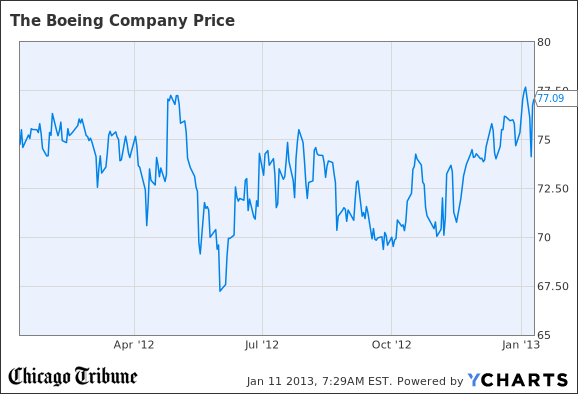
Boeing shares were down 2.5 percent in midday trading to $75.15.


The announcement comes amid yet more reports Friday of problems with the highly anticipated "Dreamliner" jet, including a cracked cockpit window and another oil leak on a Japanese carrier. They add to a rash of other reported problems this week, most seriously a battery fire on a parked 787 in Boston, an incident under investigation by the National Transportation Safety Board.


The plane model is in use in Chicago for temporary United Airlines flights between Chicago O'Hare and Houston. Chicago-based United has five other 787s in service domestically. "We continue to have complete confidence in the 787 and in the ability of Boeing, with the support of the FAA, to resolve these early operational issues," a United spokeswoman said. "We will support Boeing and the FAA throughout their review."


Next week, LOT Polish Airlines plans to begin operating the region's first regular flight on a 787 between O'Hare and Warsaw, Poland. That inaugural flight is still planned for Wednesday, a spokeswoman said. All told, Boeing has delivered 50 Dreamliners to customers around the world, many to Japanese carriers.


Aviation experts have said the planes are safe and that glitches are common on new models of planes, especially ones as revolutionary as the 787, which uses mostly composite materials instead of metals to create an aircraft that's more lighter, more fuel-efficient and more comfortable for passengers. However, other observers have said the concentration of problems in a short period and the media attention they garner is damaging the reputation of Boeing, which was already under scrutiny for delivering the Dreamliner to customers more than three years late. The plane's list price is about $207 million.


The latest problems came Friday, when Japanese carrier All Nippon Airways said a domestic flight from Tokyo landed safely at Matsuyama airport in western Japan after a crack developed on the cockpit windscreen, and the plane's return to Tokyo was cancelled.


"Cracks appear a few times every year in other planes. We don't see this as a sign of a fundamental problem" with Boeing aircraft, a spokesman for the airline said. The same airline later on Friday said oil was found leaking from an engine of a 787 Dreamliner after the plane landed at Miyazaki airport in southern Japan. An airline spokeswoman said it later returned to Tokyo after some delay. No one was injured in either incident.


Boeing said Friday the 787 logged 50,000 hours of flight, with more than 150 flights occurring daily, and that its performance has been on par with the Boeing 777, which it calls "the industry's best-ever introduction" of a new airplane. "More than a year ago, the 787 completed the most robust and rigorous certification process in the history of the FAA," Boeing said in a statement. "We remain fully confident in the airplane's design and production system."


Ray Conner, president and chief executive officer of Boeing Commercial Airplanes, said Friday that the recent problems were not caused by Boeing's outsourcing of production or by ramping up production too quickly.


"We are fully committed to resolving any issue that affects the reliability of our airlines," he said.


gkarp@tribune.com

Reuters contributed
 
BA Chart


BA data by YCharts


BA Chart


BA data by YCharts


Read More..

'Lincoln' leads Academy Award contenders with 12 nominations


With a conspicuous diss of Kathryn Bigelow, the un-nominated director of “Zero Dark Thirty,” the Academy Awards nominations were announced Thursday morning.


“Zero Dark Thirty” was one of nine films given the best picture nomination nod. The others: “Beasts of the Southern Wild”; “Silver Linings Playbook”; “Lincoln”; “Les Miserables”; “Life of Pi”; “Amour”; “Django Unchained”; and “Argo.” With 12 nominations total, director Steven Spielberg’s “Lincoln” led this year’s pack, unusually full of films that have reached a broad mainstream audience. “Life of Pi” came in with 11 nominations; “Silver Linings Playbook” and “Les Miserables” received eight.


The best actress Oscar nominees include the oldest-ever performer in that category (Emmanuelle Riva, 85, for “Amour”) as well as the youngest (Quvenzhane Wallis, 9, “Beasts of the Southern Wild”). They’ll compete for the Feb. 24 Oscars against Naomi Watts (“The Impossible”), Jessica Chastain (“Zero Dark Thirty”) and Jennifer Lawrence (“Silver Linings Playbook”).


To the surprise of no one on this planet or any other, Daniel Day-Lewis led the best actor competition for “Lincoln.” His fellow nominees: Denzel Washington, “Flight”; Hugh Jackman, “Les Miserables”; Bradley Cooper, “Silver Linings Playbook”; and in the year’s most unsettling performance, Joaquin Phoenix, “The Master.”


“Silver Linings Playbook” fared well, against some predictions, scoring a supporting actor nomination for Robert De Niro and a supporting actress nod for Jacki Weaver. Other supporting actors nominated include Christoph Waltz for “Django Unchained”; Philip Seymour Hoffman, “The Master”; Alan Arkin, “Argo”; and Tommy Lee Jones,” Lincoln.” All have won Oscars before.


Along with Weaver, Sally Field received a supporting actress nomination, hers for “Lincoln.” The competition: Anne Hathaway, singing her guts out all the way to the podium on Feb. 24 (I’m guessing) for “Les Miserables”; Helen Hunt for “The Sessions” (more of a leading role, in fact); and Amy Adams as the Lady Macbeth of the action in “The Master.”


It’s a huge showing for “Beasts of the Southern Wild,” whose director, Benh Zeitlin, goes toe to toe against his fellow directing nominees David O. Russell (“Silver Linings Playbook”), Ang Lee (“Life of Pi”), Michael Haneke (“Amour”) and Spielberg. Along with “Zero Dark Thirty” director Bigelow, “Argo” helmer Ben Affleck, widely expected to be nominated ... wasn’t.


Read More..

Jimmy Dushku: The 25-year-old who is North Korea’s one true Twitter friend


Mother Jones takes a look at a globetrotting young investor who’s the only American — and the only human being — Pyongyang follows


Google Chairman Eric Schmidt capped a controversial four-day visit to North Korea on Thursday with a call for the country’s censorship-happy communist government to give its people access to the internet, or face further economic decline due to the country’s global isolation. It was a strong message from one of the web’s most powerful figures, although North Korea watchers seem pretty confident the country’s young leader, Kim Jong Un, will ignore it. There’s one American, however, Pyongyang does appear to listen to. That would be Jimmy Dushku, a young investor who is one of exactly three Twitter users Kim’s government follows on Twitter. What’s the story behind this unlikely online bromance? Here, a guide:


Who is Jimmy Dushku?
He’s a 25-year-old financial whiz kid from Austin, Texas. Dushku, who also goes by the nicknames “Jimmer” and “Jammy,” started a website development business when he was 14, according to Mother Jones, and he parlayed his early earnings into investments that now include everything from construction projects in Europe to real estate in Texas to mines in South America. He’s also a rabid Coldplay fan, and when he isn’t jetting around the world, he says he likes to play Rachmaninoff on his piano and zoom around on his Ducati Monster motorcycle.


SEE MORE: North Korea’s rocket launch: 3 consequences


So how did he become buddies with North Korea?
Dushku tells Asawin Suebsaeng at Mother Jones he’s not really sure. “People always ask me how it happened, and I honestly can’t remember,” he says. “It started sometime back in 2010. I was initially surprised.” North Korea followed him, he followed North Korea “out of courtesy.” He tweeted back, “Hello my friend,” and a relationship was born. Then, the North Korean government, which has piled up some 11,000 followers in two-and-a-half years on Twitter, abruptly whittled down the number of accounts it follows, leaving just three. Dushku made the cut (along with a Vietnam account and another official North Korean handle).


What has Dushku gotten from the relationship?
Death threats, for one thing. Not long after he linked up with North Korea’s account, which goes by @uriminzok (or “our nation”), Dushku says he started getting angry messages from exiles and South Koreans. Since then, he has mostly kept a low profile, just to be safe, although he does occasionally grant interviews to foreign publications. For its part, North Korea gets a rare glimpse at the outside world through Dushku, as his is the only account North Korea follows that is regularly updated — the other two haven’t tweeted in months. He’s also the only human being in the bunch.


Will @JimmyDushku and @uriminzok ever meet in real life?
That’s always the question for acquaintances who meet online, isn’t it? Dushku says his friendly relationship has won him a standing offer to visit North Korea. Casual observers, however, advise him to proceed with caution. “Am I the only one thinking they picked some random guy so they can lure him into North Korea and use him as a political prisoner/bargaining chip?” one commenter at Gizmodo said. Another suggests that Dushku play it cool, without making Pyongyang angry, saying, “Never unfollow anybody with nuclear weapons.”


Sources: Austinist, CNN, Gizmodo, Mother Jones


View this article on TheWeek.com Get 4 Free Issues of The Week


Other stories from this topic:


Like on Facebook - Follow on Twitter - Sign-up for Daily Newsletter
Social Media News Headlines – Yahoo! News


Read More..